Aligning six roles around one product
A UAE construction company ran operations across multiple disconnected tools. The goal: one product, desktop and smartwatch, to manage quality across a fragmented field-and-office team.
At a glance
Turned a fragmented, multi-tool workflow into one product across desktop and smartwatch - aligned across six roles and shipped to production.
The engagement
Context
The company ran field and office operations through several disconnected tools, each with its own habits and assumptions about how work should be tracked. The goal was a single SaaS platform, spanning desktop and smartwatch, built to bring workforce time, effort, and quality data into one place.
Role & Team
The designer was the sole design resource on this project, working alongside six cross-functional roles - a product owner, an infrastructure architect, lead backend and frontend engineers, a business analyst, and the client's design lead. The design lead owned the visual system and held final say on visual direction; flow, structure, and content were the designer's responsibility.
Designing the shared language
The Challenge
The requirements didn't arrive clean. Field teams and office teams ran different workflows, and the new product had to absorb the functions of several separate tools at once - every team had their own version of how it should work. The first response was scale: hours of meetings across six roles, working through whether each requested function was even feasible to build.
But meetings alone created a second problem. Six roles meant six vocabularies - people would agree out loud and still mean different things, because there was nothing on screen to point at.
The Approach
The fix was simple to say and hard to do live: put something real on screen before the ambiguity could take hold. Wireframes were never just documentation - they were drafted ahead of each meeting from the PO's and BA's requirements, then edited live as the discussion moved, adjusted on the spot or rebuilt as a new version when an idea changed the shape of the screen. That let the room assess a real option together and reach a decision in the same meeting, instead of carrying ambiguity into the next one.
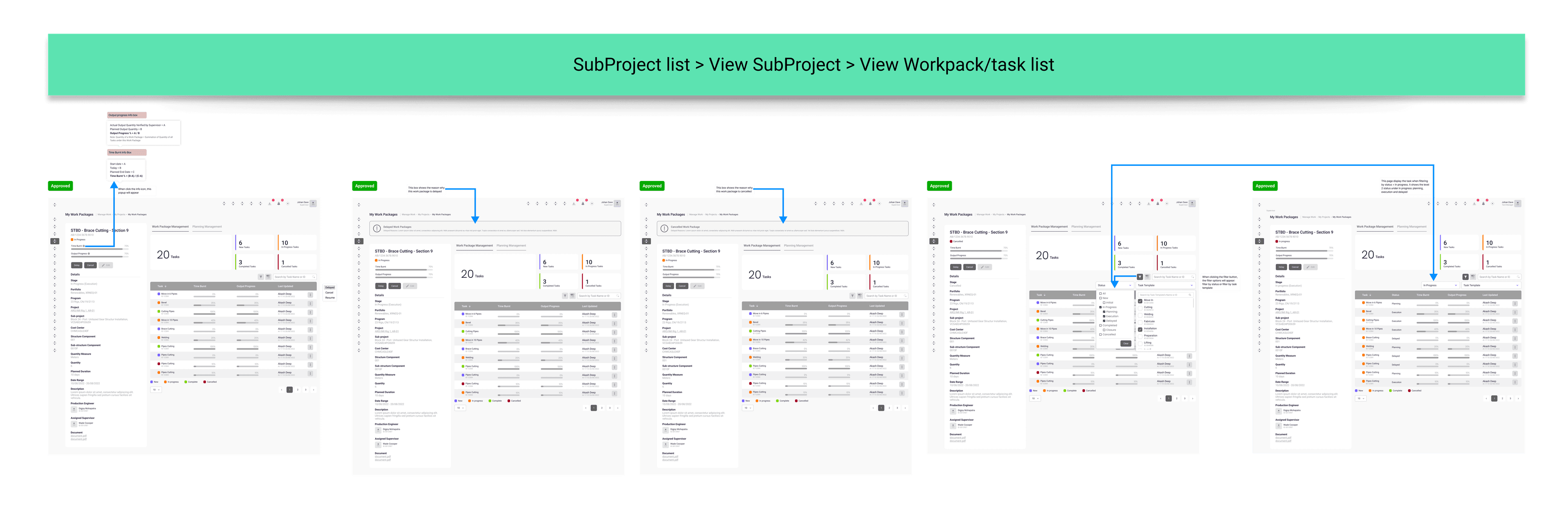
Five connected views of a single work package: reviewing its progress and task breakdown, surfacing the stated reason when a package is marked delayed or cancelled, and updating a task's status inline. Arrows trace the click path between each state.
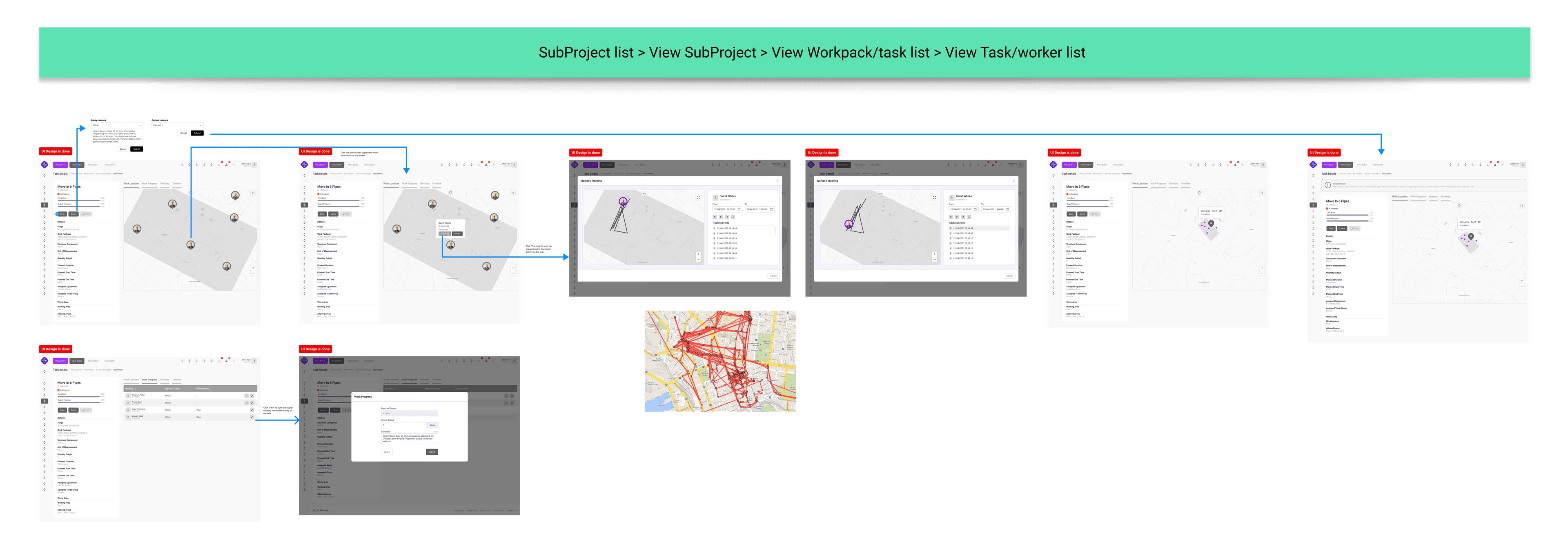
Following a supervisor from a task's detail view into an individual worker: viewing their live position and movement path on the job-site map, their tracked activity log, and logging actual output against the plan. Arrows trace the click path from task to worker record.
From Flow to Screen
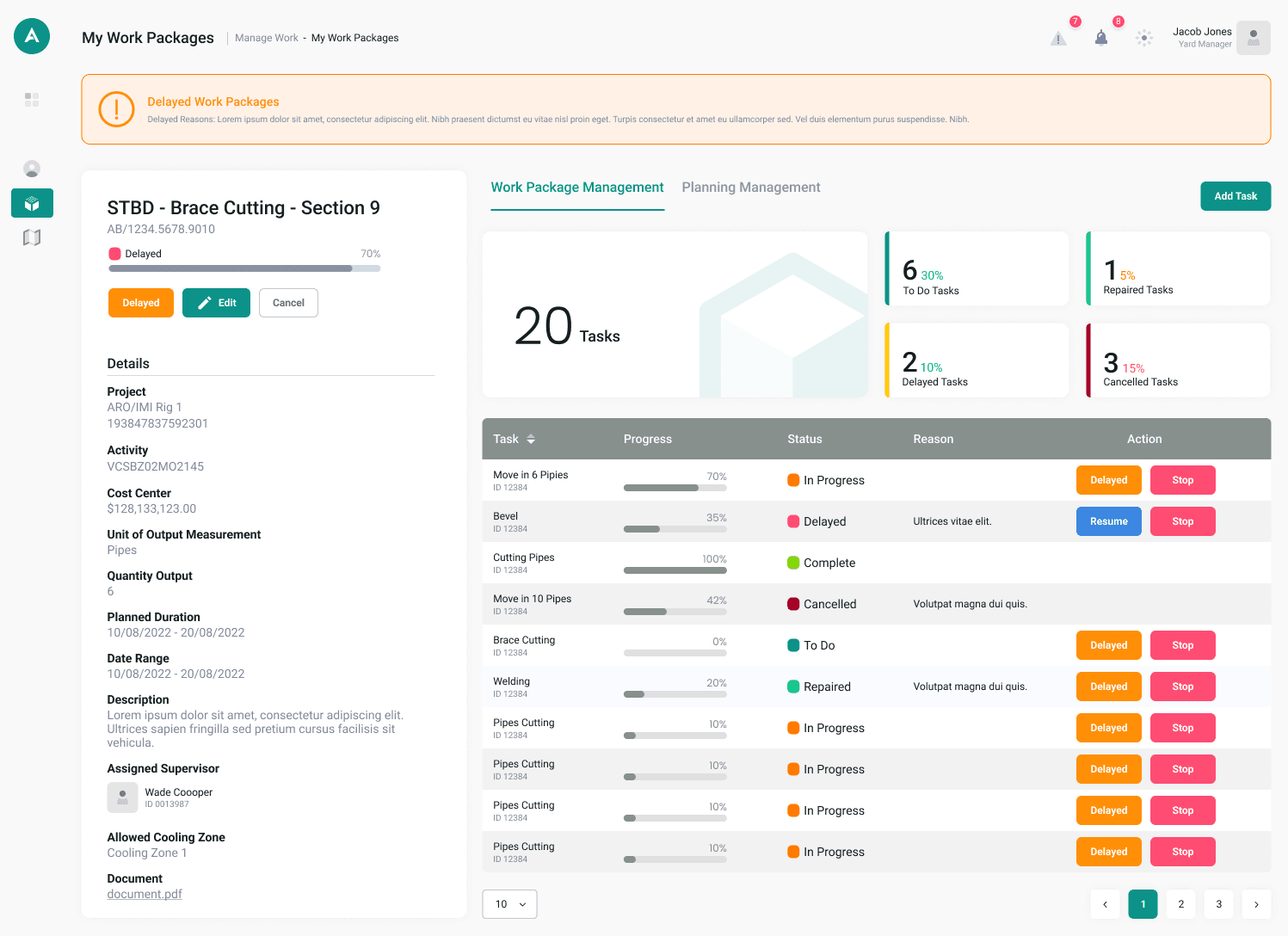
Once a flow held up live in the room, the business analyst documented it. The designer then built the actual screen against the client's style guide, with final visual sign-off from the client's design lead.
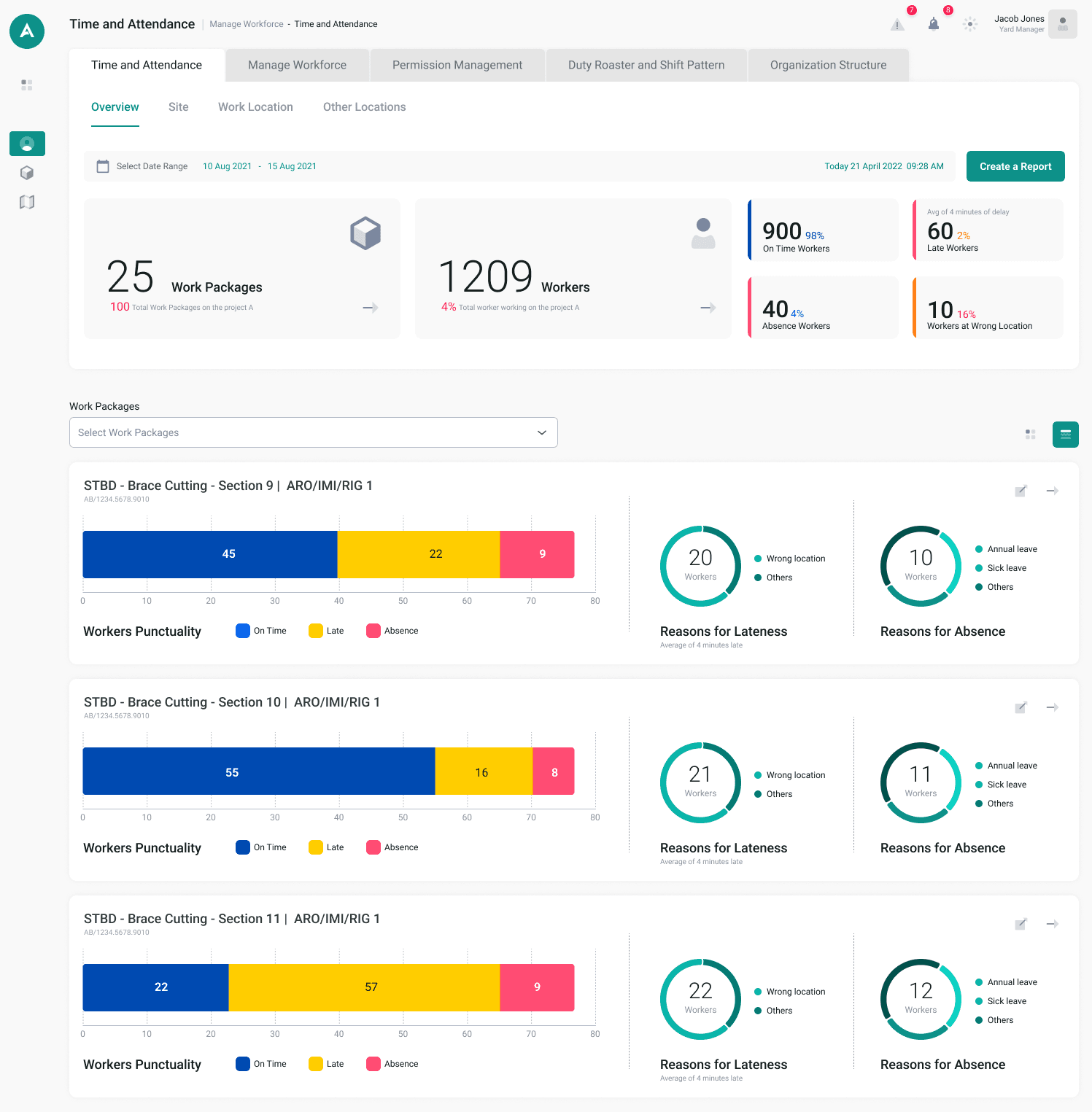
One Product, Two Surfaces
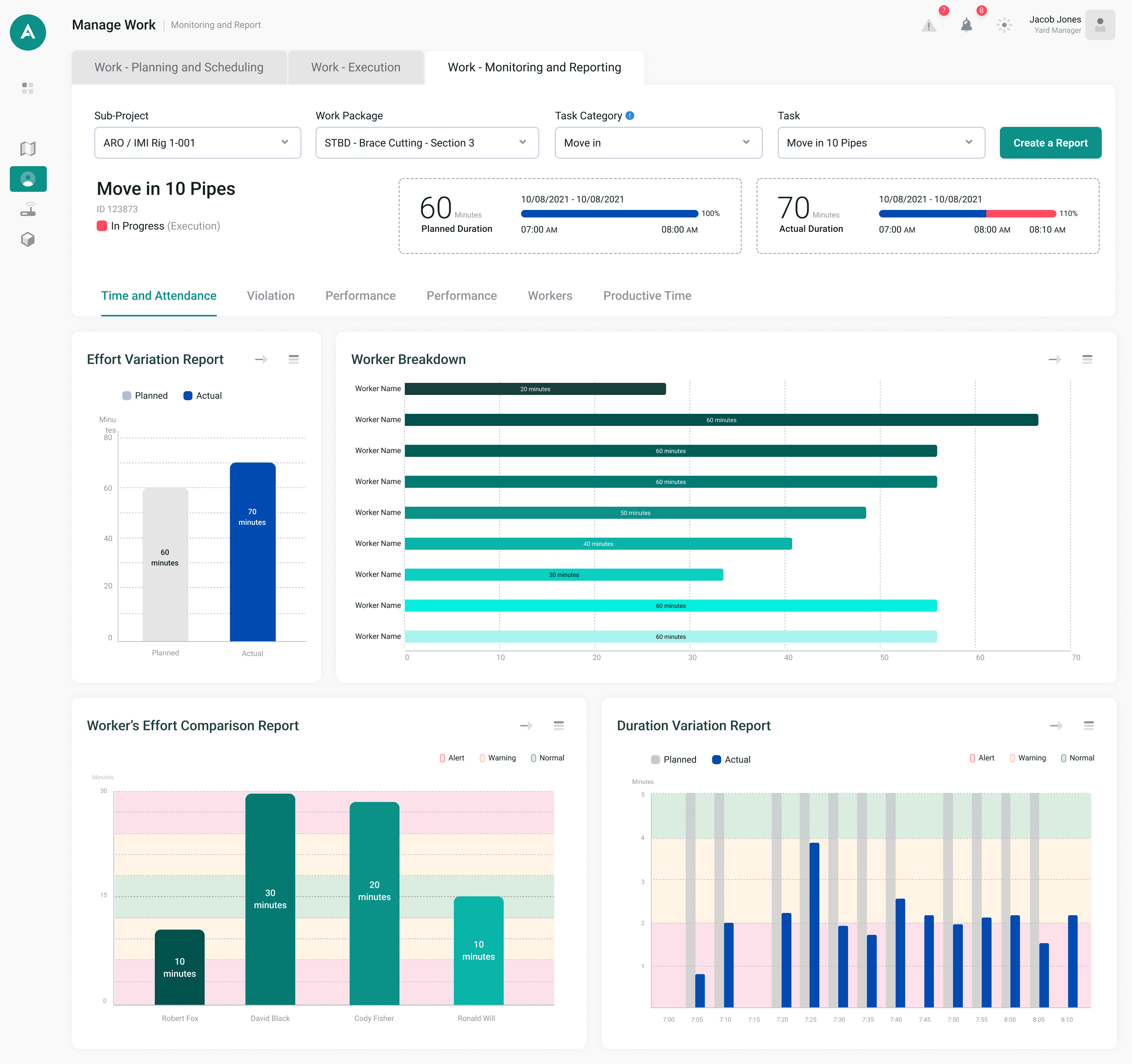
The unifying move was bringing two contexts into one product: desktop for planning and management, smartwatch for the field. The same data, read differently depending on where the work was happening.
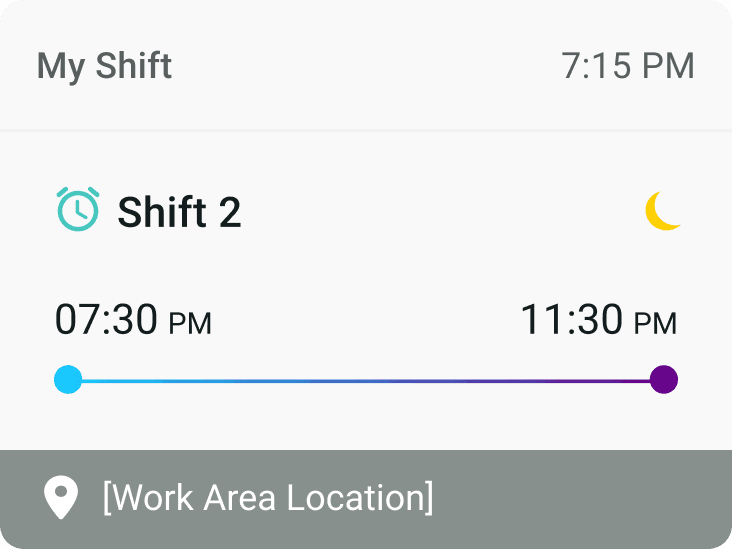
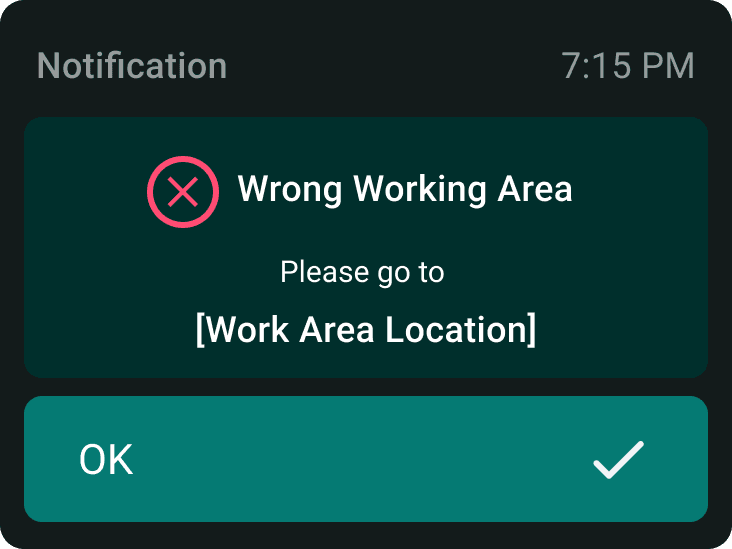
The smartwatch screens used by the worker in the field.
Recognition
Abdullah, the client's design team lead, highlighted Hoang Anh (Jay)'s dedication, productivity, and professionalism - and called her a very pleasant teammate to work with. The client rated her performance 5 stars and asked to keep working with her long-term.
Abdullah · Design Team Lead, client side
Outcome
The product shipped to production after roughly a year of work. Six roles, two device contexts, and years of established habits all had to move together - alignment wasn't a soft skill layered on top of design. It was the delivery mechanism itself. The client agreed: five stars, and a request to keep working together long-term.